Been Here, Still Here and Thriving: Why Indigenous Affirmation Is Essential to Healthy Manhood
Been Here, Still Here and Thriving: Why Indigenous Affirmation Is Essential to Healthy Manhood
By Chucho Ruiz, Coordinator of Healthy Manhood Initiatives
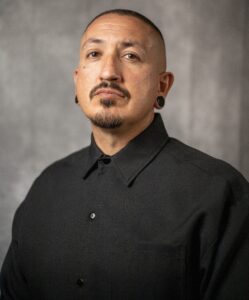 So much of the work of healthy manhood begins with a willingness to unlearn. At A Call to Men, we invite men and boys to examine the stories they have inherited about power, dominance, competition, gender, and emotional disconnection. But unlearning is only one part of the work. We also have to remember. That is part of what inspired “Indigenous Affirmation: Been Here, Still Here, and Thriving,” a course I helped develop for A Call to Men’s new learning management system. At its core, this course is an invitation to consider Indigenous experiences, visibility, and presence in a deeper way. The title says it plainly because it needs to be said plainly: We have been here, we are still here, and we are thriving.
For far too long, Indigenous peoples have been pushed to the margins of this country’s imagination. Our histories are distorted. Our communities are often discussed in the past tense. Our identities are flattened into stereotypes, symbols or surface-level acknowledgments. When Indigenous peoples are made visible, too often that visibility is still filtered through erasure, misrepresentation or a limited understanding of who we are and what we carry. This course was created to interrupt that by asking learners to reflect not only on how Indigenous peoples have been misrepresented, but also on how unconscious bias, inherited narratives and everyday practices can continue to perpetuate erasure.
There is more to Indigenous peoples than spirituality, ceremony or cultural practices people find beautiful from a distance. There are Indigenous knowledge systems, contributions, insights, self-governance, self-determination, ancestral teachings, languages, relationships and ways of being that continue to shape how we understand community, land, gender, healing and care. We talk often about intergenerational and historical trauma. But if trauma is the only lens through which people understand Indigenous identity, then our full humanity is still being denied. There is more to us than what has been done to us. We do not talk enough about intergenerational and historical medicine, brilliance and joy.
In many ways, this course aligns deeply with A Call to Men’s larger work around healthy masculinity because both are rooted in community. One of our principles is centering community-based efforts, and I see that value reflected in Indigenous communities all the time. When we think about nationhood and tribalhood, we are talking about how we show up for one another, how we support one another through struggle, and how we lift one another up through encouragement. That is also the work of healthy manhood. At A Call to Men, we invite men to move away from harmful ideas of masculinity that teach them to dominate, disconnect, and compete at the expense of their full humanity. We invite them into a different way of being, one that makes room for accountability, tenderness, connection and care. I also see alignment in how we talk about gender, because within many Indigenous communities, there are ancestral teachings that recognize more than two genders and help us understand gender expansively as part of the fullness of who people are.
For those taking this course, my hope is that they leave with a deeper sense of responsibility. I hope they ask themselves what it means to be a good relative. Land acknowledgments can be meaningful, but they cannot be the end of the work. We have to ask what comes after the acknowledgment. What does it look like to build real relationships? What does it look like to learn from local Indigenous communities without making assumptions about what they need, what they believe, or how they operate?
Real affirmation requires practice. It means honoring sovereignty and self-determination, challenging stereotypes when they show up, and recognizing that visibility without respect is not the same as affirmation. Most of all, it means remembering that thriving is not theoretical. Indigenous peoples are creating, teaching, leading, organizing, governing, healing, laughing, loving, and imagining futures rooted in the wisdom of those who came before us. We have been here, we are still here, and we are thriving.